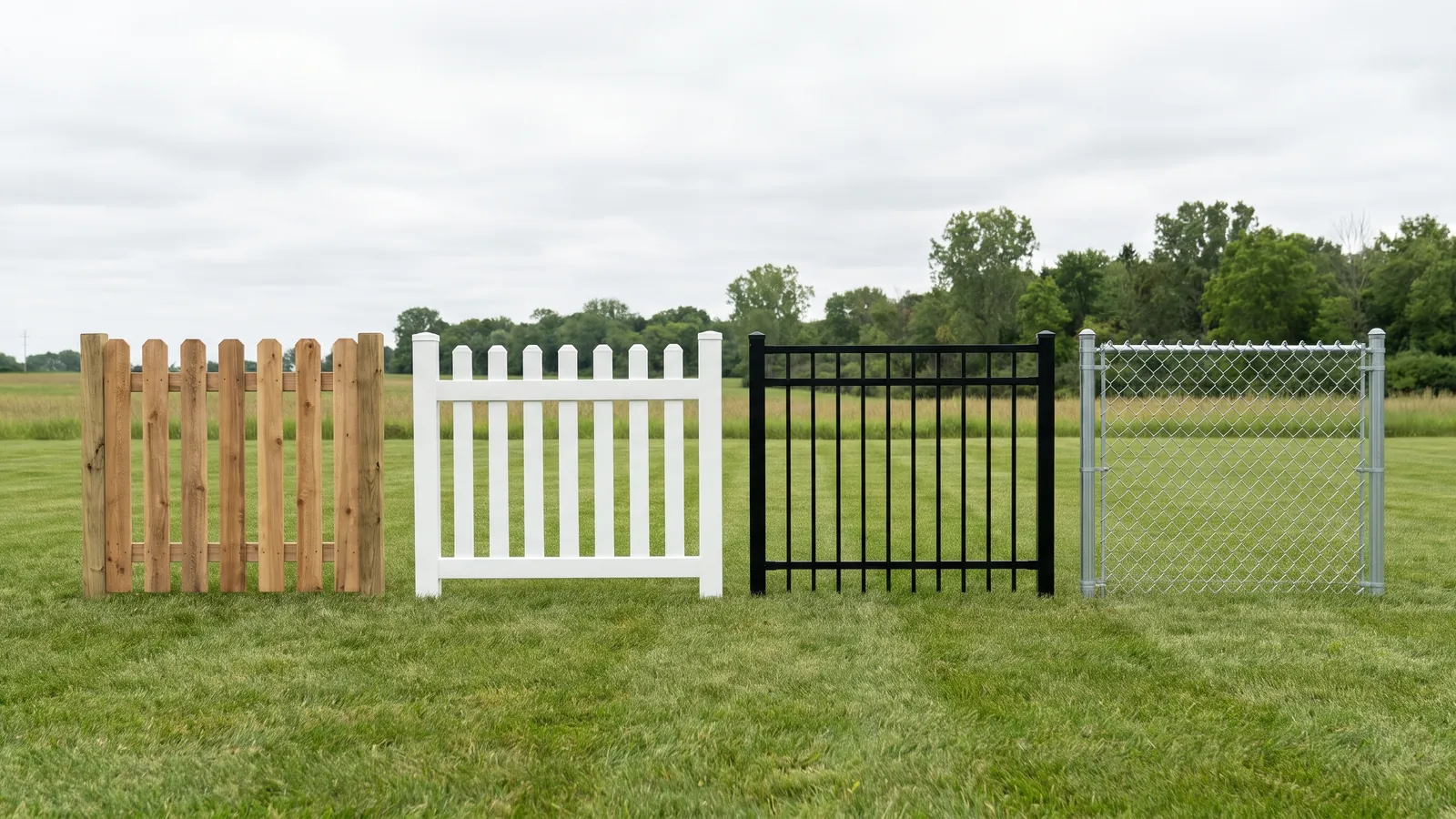
The best fence for your yard depends on what it has to do, how much upkeep you want, what the HOA allows and how exposed the lot is to wind and salt. Here is a straightforward comparison.
| Material | Installed, 2026 | Upkeep | Coastal notes |
|---|---|---|---|
| Pressure-treated pine | $28 – $42 / ft | Clean and seal every few years | Needs good fasteners; mildews in shade |
| Cedar | $40 – $60 / ft | Seal to keep color | Naturally decay-resistant, stays straighter |
| Vinyl | $38 – $62 / ft | Rinse occasionally | No rot or rust; solid panels catch wind |
| Aluminum | $36 – $60 / ft | Rinse occasionally | No rust; open design passes wind |
| Chain link | $16 – $36 / ft | Very little | Galvanized rusts slowly near salt; coated lasts longer |
Choose wood if
You want the lowest cost for full privacy, like a natural look, and are happy to clean and seal it. Wood is also easy to repair one board at a time.
Choose vinyl if
You want privacy without staining, your HOA specifies it, or you simply want a fence that looks the same in ten years. Plan the design for wind on exposed lots.
Choose aluminum if
You want to keep a view, need a pool barrier, live near salt water, or want a front-yard fence that looks elegant without blocking the house.
Choose chain link if
You need to enclose a lot of ground, keep a dog in, or fence a side yard for the least money. Black-coated mesh looks far better than silver.
Mixing materials
Many properties use two: privacy near the patio and a more open, less expensive fence along the far lines. Matching gates and posts make it look planned.