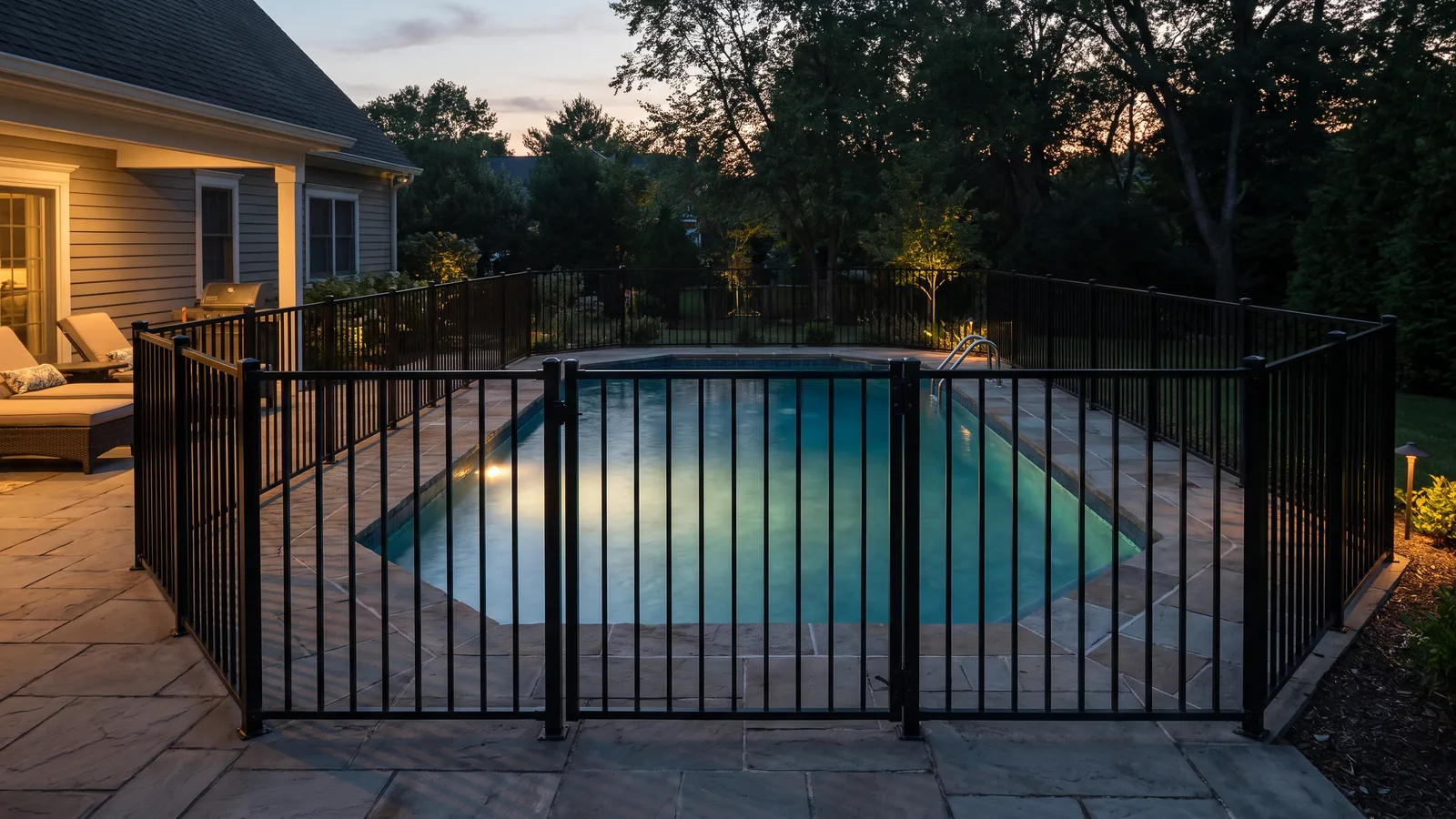
A pool barrier has one job: keep a young child from getting to the water without an adult. North Carolina's building code sets the baseline at a barrier at least four feet tall. When a pool is permitted, the barrier is usually inspected with it, and many HOAs and insurers look at it too.
Height is the starting point
Four feet is the minimum, measured on the side away from the pool. Many owners choose five feet for extra margin, especially if the ground outside the fence slopes up.
Gates
Gates are where most barriers fail in real life, because they get propped open or do not latch. A pool gate should close itself and latch itself every time it is released, from any position. The latch is mounted high, out of a child's reach, and the gate should open away from the pool. We fit self-closing hinges and self-latching latches on every pool gate we build and test them before we leave.
Gaps and climbability
A good barrier has no openings a child can squeeze through and no handholds or footholds to climb. That means tight picket spacing, horizontal rails on the pool side rather than the outside, a small gap at the bottom, and nothing such as chairs, planters or AC units placed against the outside of the fence. Exact limits on gaps and rail spacing are set in the code; we confirm them with the inspector for your pool.
When the house is part of the barrier
If the pool is in a fenced back yard and the house forms one side of the enclosure, doors and windows that open onto the pool area become part of the barrier. Alarms or other measures may be required. Mention this at the estimate.
Rental and vacation homes
Beach houses and rentals have guests who do not know the property. Self-closing gates and clear latches matter even more there.