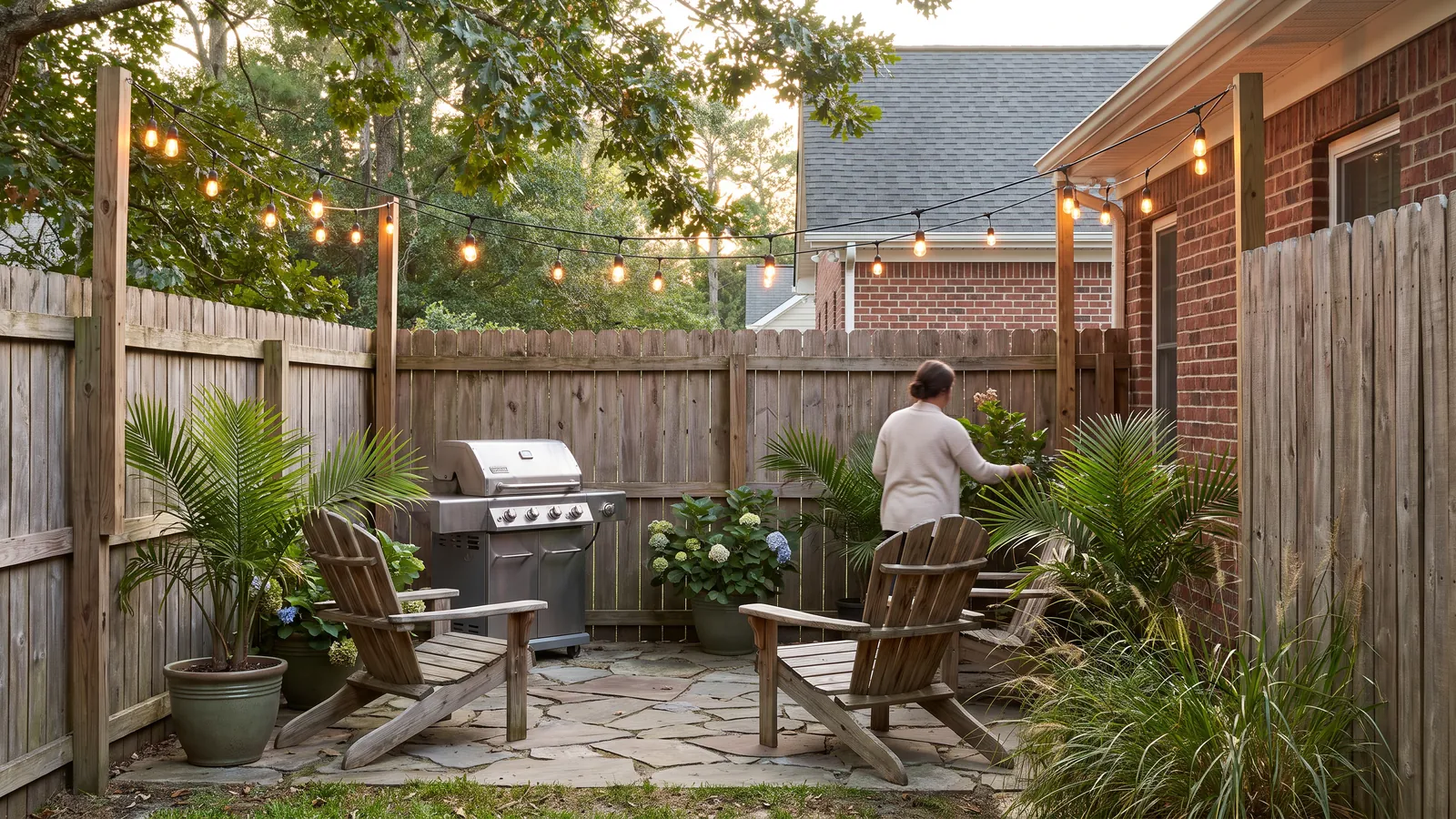
Privacy fences that close in the yard without catching every gust
A six-foot privacy fence is what most people mean when they call about a fence. Getting it to stand straight on a sandy coastal lot is about posts, rails and wind.
The point of a privacy fence is simple: you sit on the patio and do not see the neighbors, the road or the parking lot behind the yard. In practice that means six feet of height (taller only where the rules allow it), boards or panels with no gaps, and a line that closes the yard on all the sides that matter. In growing areas like Leland and Murrayville, where new houses go up on lots that started out open, a privacy fence is often the first project after closing.
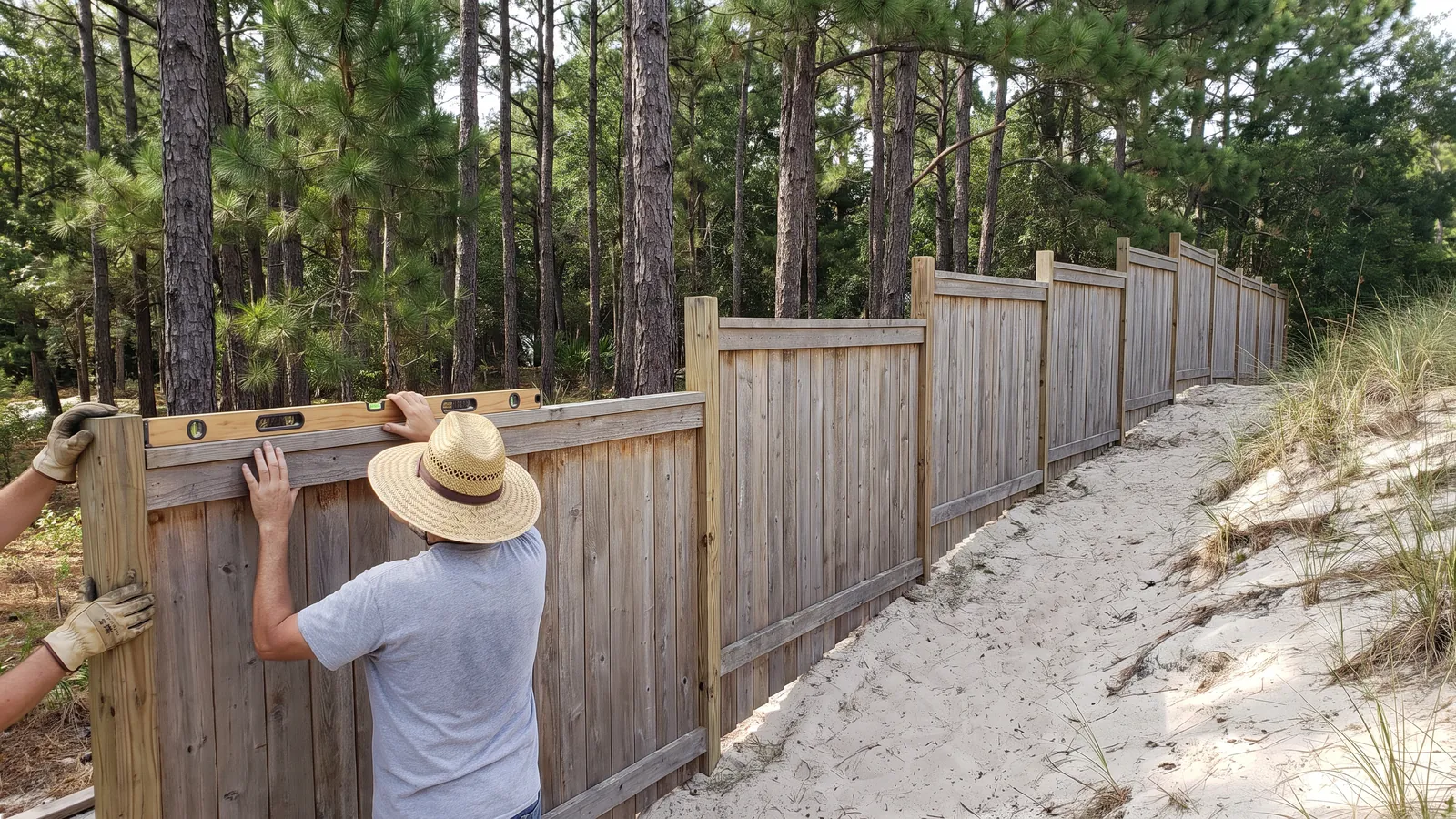
You can build privacy in wood, vinyl or a combination. A pine dog-ear fence is the most economical. Flat-top with a cap looks more finished. Shadow box looks good from both sides and lets some air through. Vinyl privacy panels skip the staining and suit many HOAs. On lots that slope toward a creek or ditch, which is common between Wilmington and Hampstead, the fence steps down in level sections so the top line looks deliberate rather than wavy.
The engineering question is wind. A solid six-foot fence is a large flat surface, and in a strong tropical storm the load on it is enormous. What keeps it standing is deeper posts, a wider concrete footing, closer post spacing on exposed runs, and three rails on wood fences. Where a lot faces open water or a wide field, we will tell you honestly whether a fully solid fence makes sense there.
How we build privacy
- Check height rules. Confirm with the city, county and HOA that six feet is allowed where the fence will stand, especially near the front of the house
- Plan the steps. On sloping ground the sections are planned so each step is even and the bottom gap stays small
- Set heavier posts. Posts deeper and footings wider than on a short fence, with corners and gates heavier again
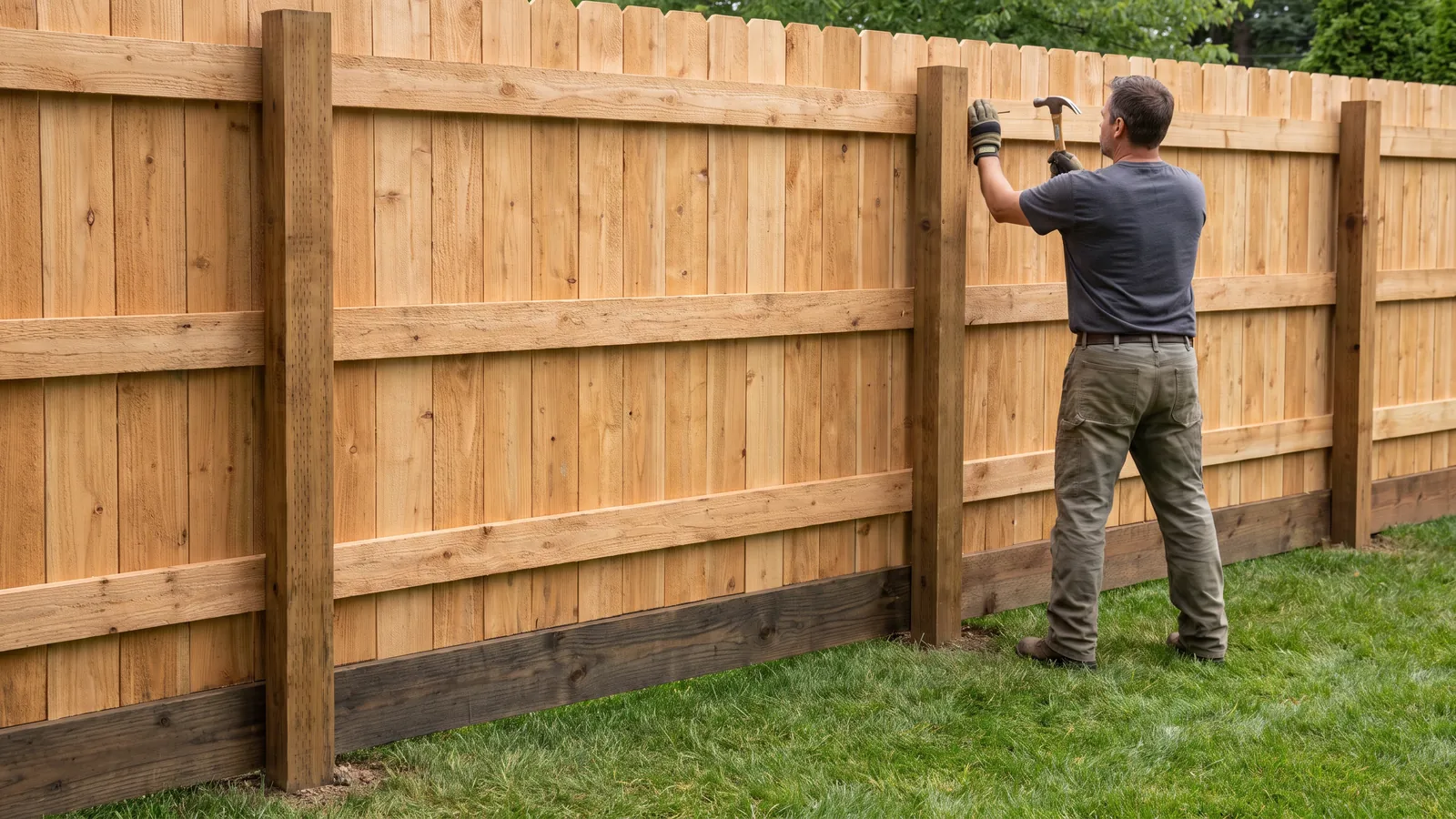
- Close the gaps. Boards fastened tight, a kickboard along the bottom, and gates hung to close flush
- Finish. Caps on posts, gates adjusted and the line walked with you
Privacy fence prices
| What | Typical 2026 range | Notes |
|---|---|---|
| Pine dog-ear privacy, 6 ft | $28 – $40 / ft | Most common |
| Pine shadow box, 6 ft | $34 – $50 / ft | Finished on both sides |
| Cedar privacy, 6 ft | $40 – $60 / ft | Warmer color |
| Vinyl privacy, 6 ft | $38 – $62 / ft | No staining |
| 8 ft privacy where permitted | $45 – $75 / ft | Wood or vinyl |
2026 planning ranges in the Wilmington area. A detailed breakdown is on the privacy fence cost page.
Questions about privacy fences
Can I build an eight-foot fence?
Usually not without approval. Six feet is the common limit for side and rear yards, and front yards are often limited to four. Check the height guide.
Which is more private, wood or vinyl?
Both are fully private when built solid. Vinyl tongue-and-groove has no gaps as it ages; wood boards can shrink slightly, which is one reason shadow box and board-on-board styles exist.
Does a privacy fence block wind on the patio?
It slows it, and that is also why it takes such a load in storms. Semi-private styles still give most of the privacy with less load.
How do you handle a slope?
We step the fence down in level sections, or rack the boards to follow the grade on gentle slopes, and fill the gap under each step with a kickboard.
How long does a six-foot fence take?
A typical backyard of 150 to 250 feet takes one to three working days.
Related pages
Price your privacy fences project
Tell us where the fence goes and what you have in mind. An estimator comes out, measures the line and leaves a written price, free of charge.
- Measured on site, not guessed from a photo
- Material, height and gates priced line by line
- Or call (910) 807-8208. Calls answered 24 hours, 7 days.