Heat, humidity, salt air and summer storms are hard on fences. The good news is that most of what keeps a fence standing is simple and takes an afternoon or two a year.
Every spring
- Walk the whole line. Push gently on each post; any that move need attention.
- Look at the base of wood posts for soft, dark wood at the ground line.
- Check that gates swing freely and latch every time. Tighten hinge screws.
- Clear vines, mulch and soil away from the bottom of the boards.
Cleaning
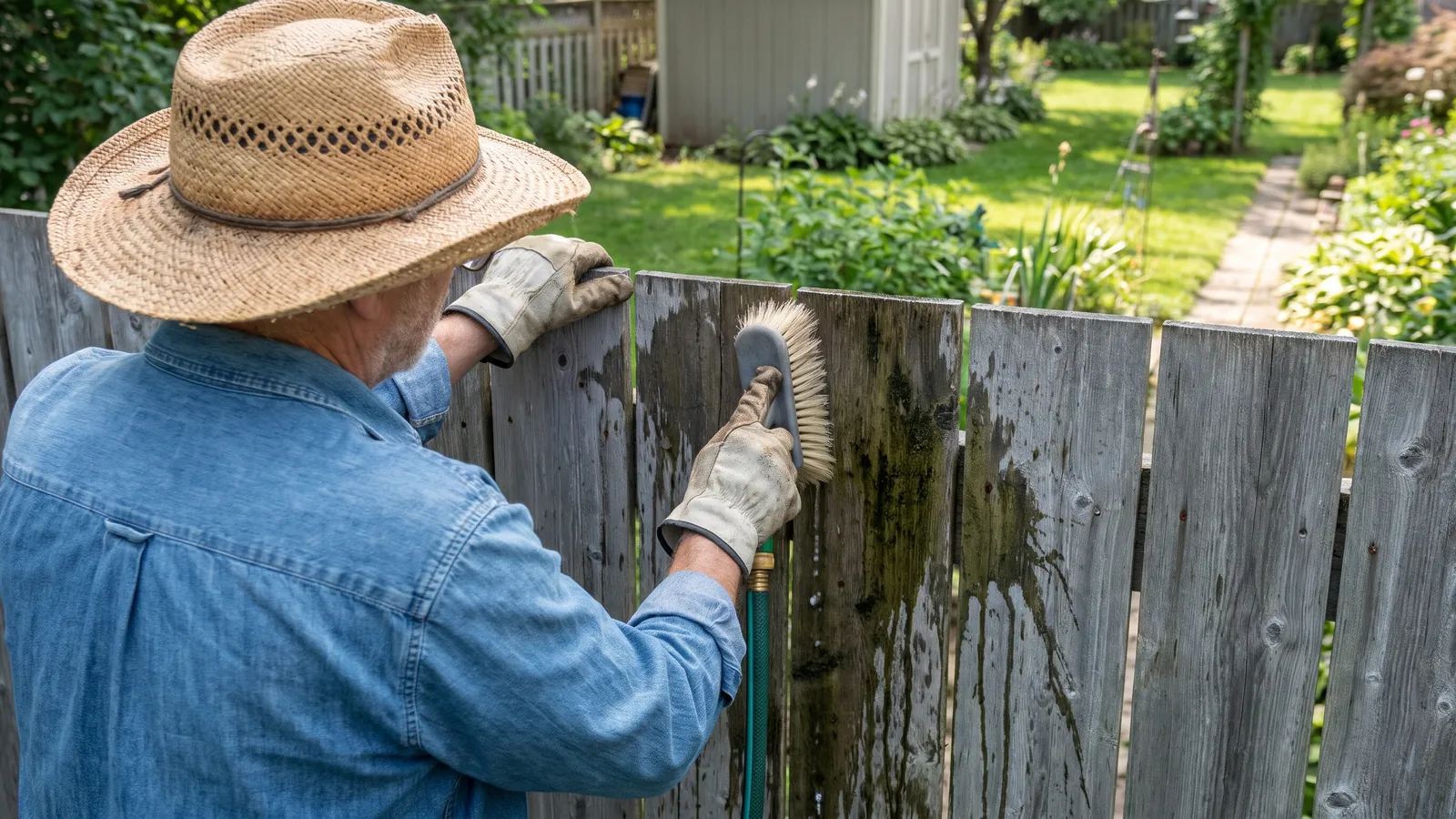
Wood and vinyl both grow mildew and algae on the shady side in humid months. A garden hose, a soft brush and a mild cleaner usually take it off. Avoid high-pressure washing on soft pine, which raises the grain and gouges the boards.
Sealing wood
A penetrating stain or water repellent every two to four years slows greying, cracking and rot. When water stops beading on the boards, it is time. New pressure-treated pine needs to dry out before its first coat. See staining and sealing.
Near the water
Rinse aluminum, vinyl and any steel hardware a few times a year to remove salt. Replace rusting fasteners before they streak the wood or let go.
Before hurricane season
Fix loose posts and sagging gates in early summer, trim limbs that hang over the fence, and know which slats or screens you would remove before a storm. See the hurricane guide.
When to replace instead
When posts are rotting along much of the line, or the fence leans in several places, repairs become a cycle. Replacing the fence with posts set properly in concrete is usually cheaper over the following years.