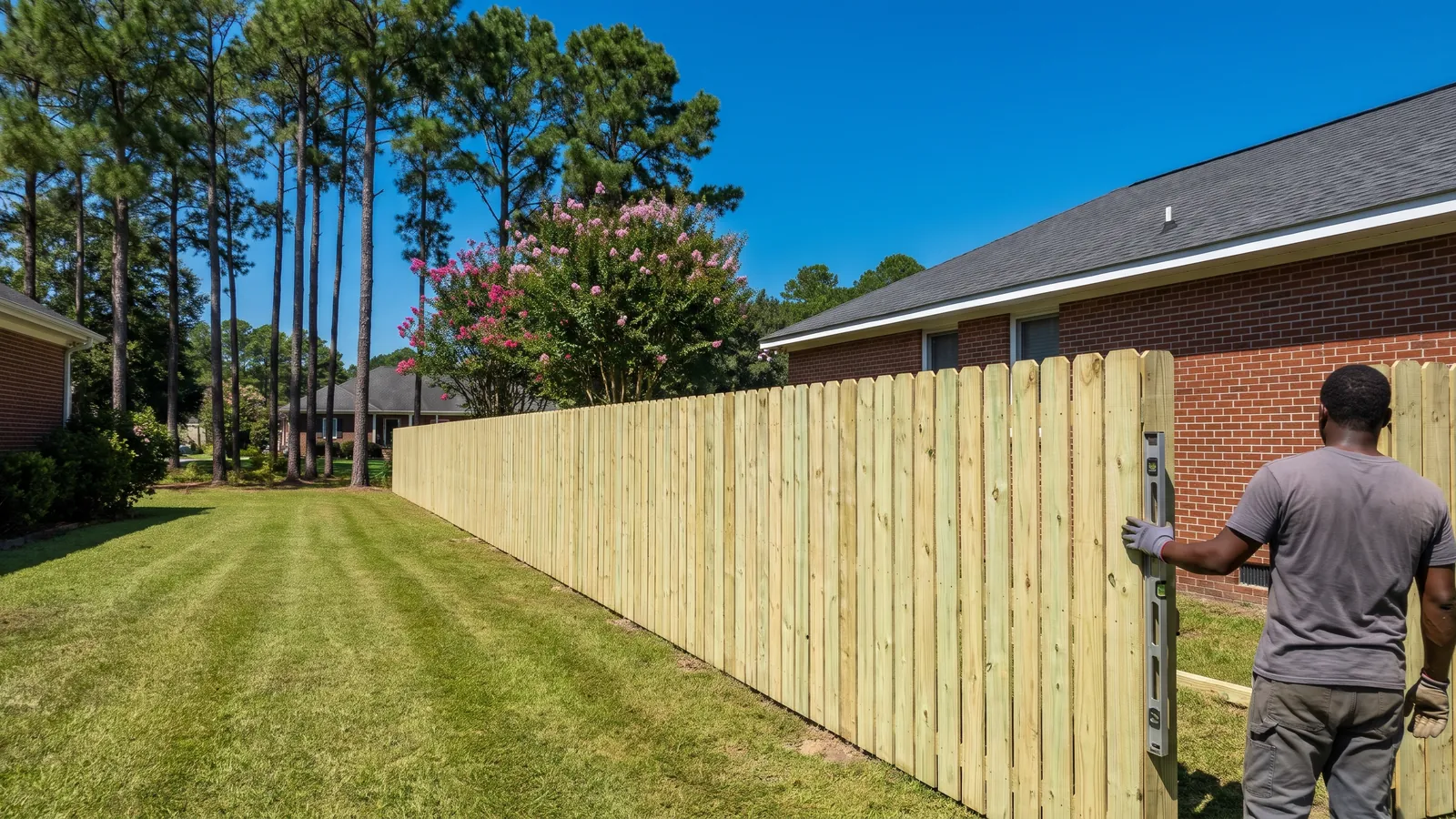
Wood fences that look right on a brick ranch and hold up in a wet summer
Wood is still the fence most Wilmington yards choose: it is the least expensive way to six feet of privacy, it suits older neighborhoods, and it can be repaired one board at a time.
Nearly every wood fence we build here is pressure-treated southern yellow pine or western red cedar. Pine is the workhorse: strong, inexpensive and treated to resist rot and termites, which matter in a county where the ground stays damp for days after a storm. Treated pine arrives a pale green or brown, weathers to grey within a year or two in the sun, and benefits from a sealer once it has dried out. Cedar costs more, is lighter, stays straighter and has a warmer color, and it resists decay naturally, which is why it shows up on front-yard pickets and on homes where the fence is part of the look.
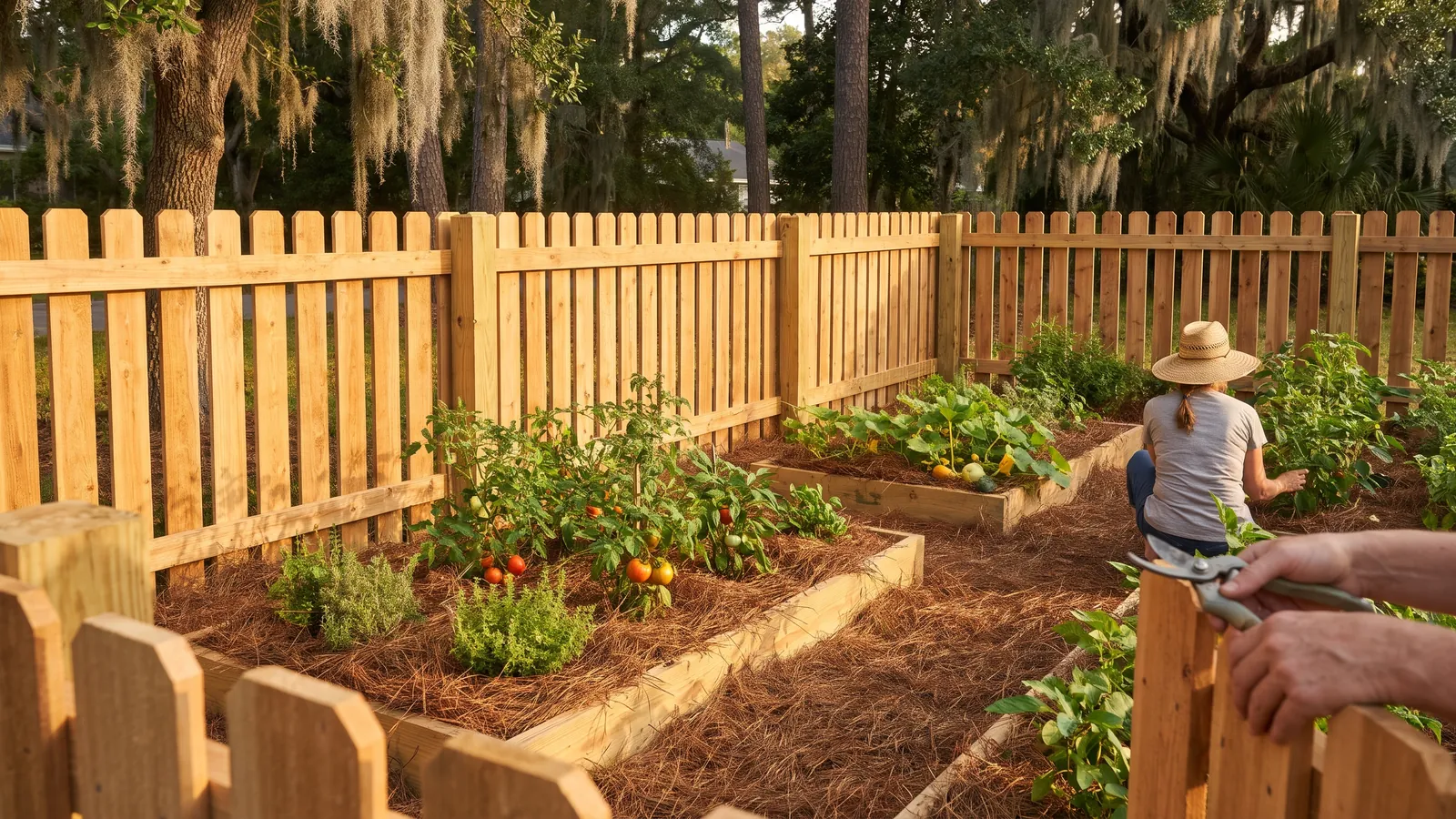
Style is the next decision. A dog-ear privacy fence, the clipped-corner board most people picture, is the most common choice in Murrayville, Monkey Junction and the Leland subdivisions. Flat-top with a cap rail gives a cleaner, more finished line. Shadow box alternates boards on both sides so the fence looks the same from either yard and lets some wind through. Picket fences at three or four feet frame the older houses around downtown, in Southport and in Burgaw. For acreage in Castle Hayne and Rocky Point, a board or split-rail fence marks the line without walling it off.
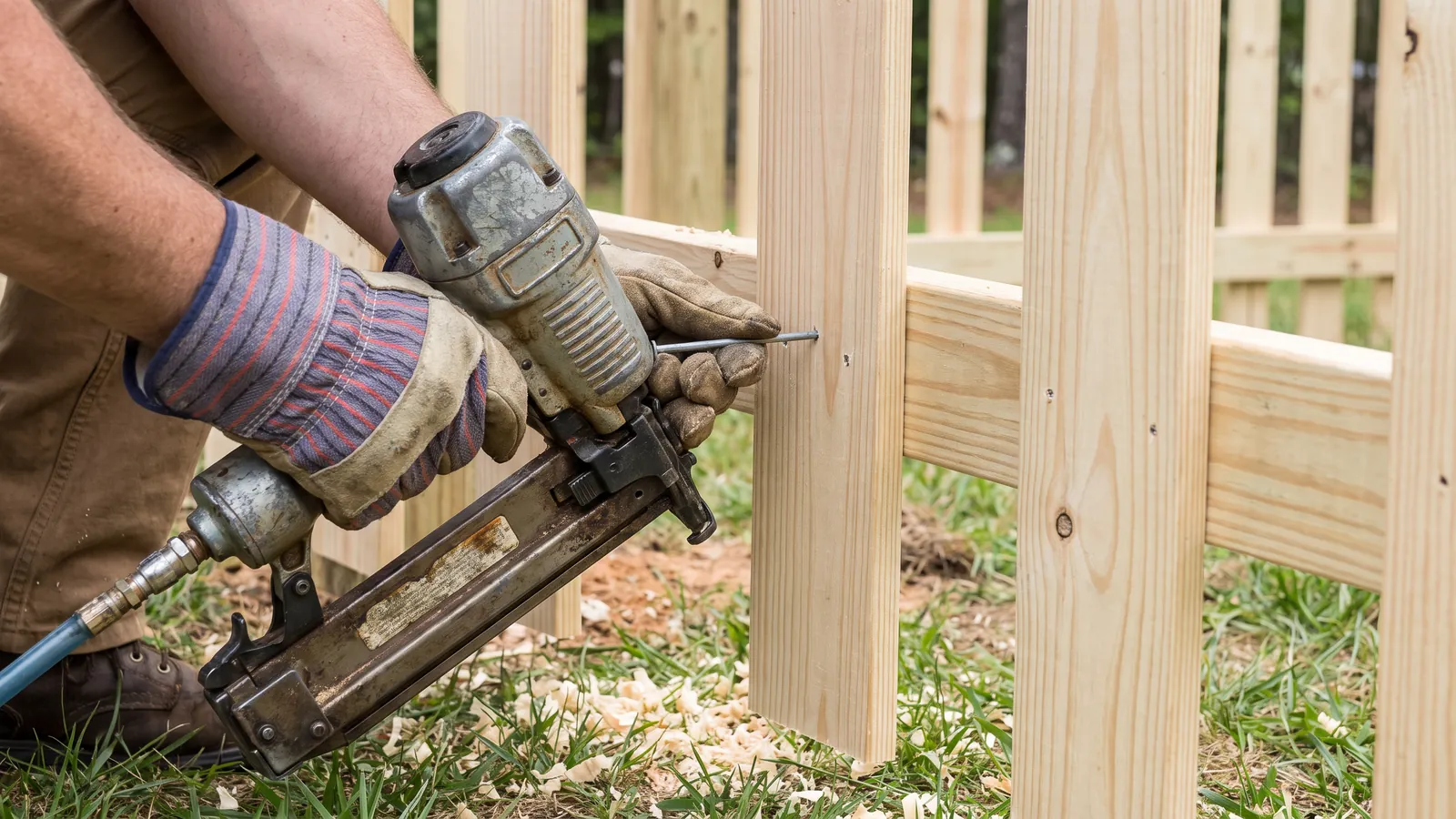
The details that decide how long a wood fence lasts are not visible from the street: posts rated for ground contact, three rails rather than two on six-foot runs, a treated kickboard along the bottom so the pickets stay out of wet soil, galvanized or coated fasteners that will not streak, and a few inches of clearance under the boards where the ground is soggy.
How we build a wood fence
- Posts first. Ground-contact posts set in concrete, corner and gate posts heavier and deeper than line posts
- Rails. Two rails on short fences, three on six-foot privacy runs so the pickets do not cup and twist
- Kickboard. A treated board along the bottom keeps pickets out of the wet ground and closes the gap dogs dig under
- Pickets. Fastened with coated nails or screws, spaced evenly and trimmed to follow the grade or stepped on slopes
- Caps and gates. Post caps shed water from the end grain; gates get steel frames or diagonal bracing so they do not sag
Wood fence prices
| What | Typical 2026 range | Notes |
|---|---|---|
| Pine dog-ear privacy, 6 ft | $28 – $40 / ft | The common backyard fence |
| Pine flat-top with cap rail, 6 ft | $34 – $48 / ft | Cleaner top line |
| Cedar privacy, 6 ft | $40 – $60 / ft | Lighter, straighter, decay-resistant |
| Pine picket, 4 ft | $22 – $34 / ft | Front yards and gardens |
| Split rail or board, 3 to 4 ft | $16 – $30 / ft | Acreage and property lines |
| Wood walk gate, 4 ft | $350 – $750 | Steel-framed gates cost more and sag less |
Planning ranges for 2026 in the Wilmington area. The written estimate is based on the measured line, the post count and the gates.
Questions about wood fences
Pine or cedar?
Pine if the budget matters most and you are happy to seal it. Cedar if the fence is on show, you want less movement and a warmer color, and you will pay roughly a third more.
When can I stain a new pressure-treated fence?
Once the wood has dried, which in a humid Wilmington summer can take a couple of months. Water sprinkled on the boards should soak in rather than bead. See staining and sealing.
Why does my neighbor's wood fence lean?
Usually shallow posts, posts set in soil instead of concrete, or a long solid run on an exposed lot that caught a storm. Rot at the base of untreated posts is the other common cause.
Which side faces out?
Convention and many HOA rules put the finished face toward the neighbor or the street. Shadow box solves the question by looking finished from both sides.
Do termites go after fences here?
They can. Treated posts and keeping mulch and soil off the boards are the best defense.
Related pages
Price your wood fences project
Tell us where the fence goes and what you have in mind. An estimator comes out, measures the line and leaves a written price, free of charge.
- Measured on site, not guessed from a photo
- Material, height and gates priced line by line
- Or call (910) 807-8208. Calls answered 24 hours, 7 days.