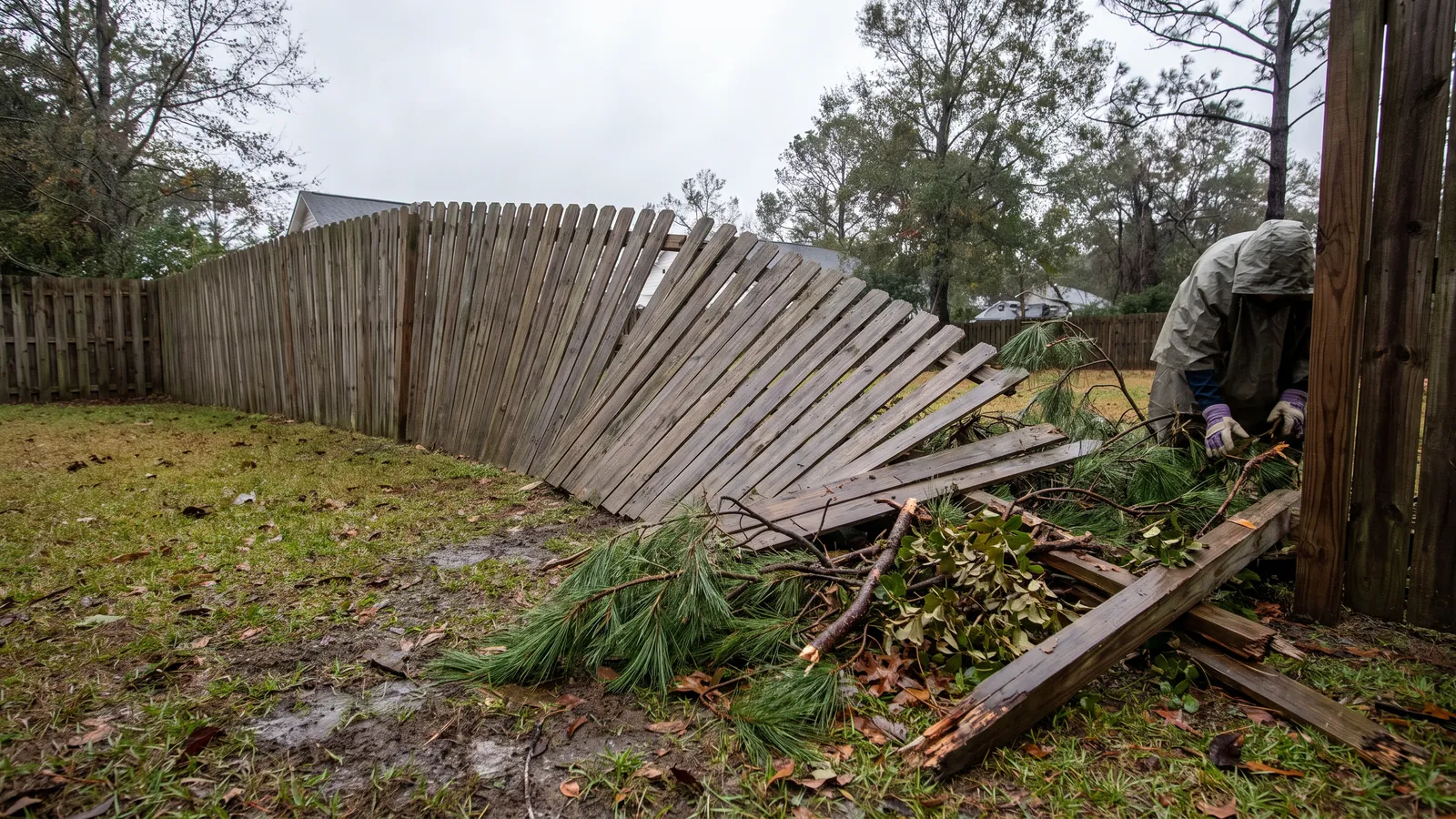
When the fence leans, sags or comes down in a storm
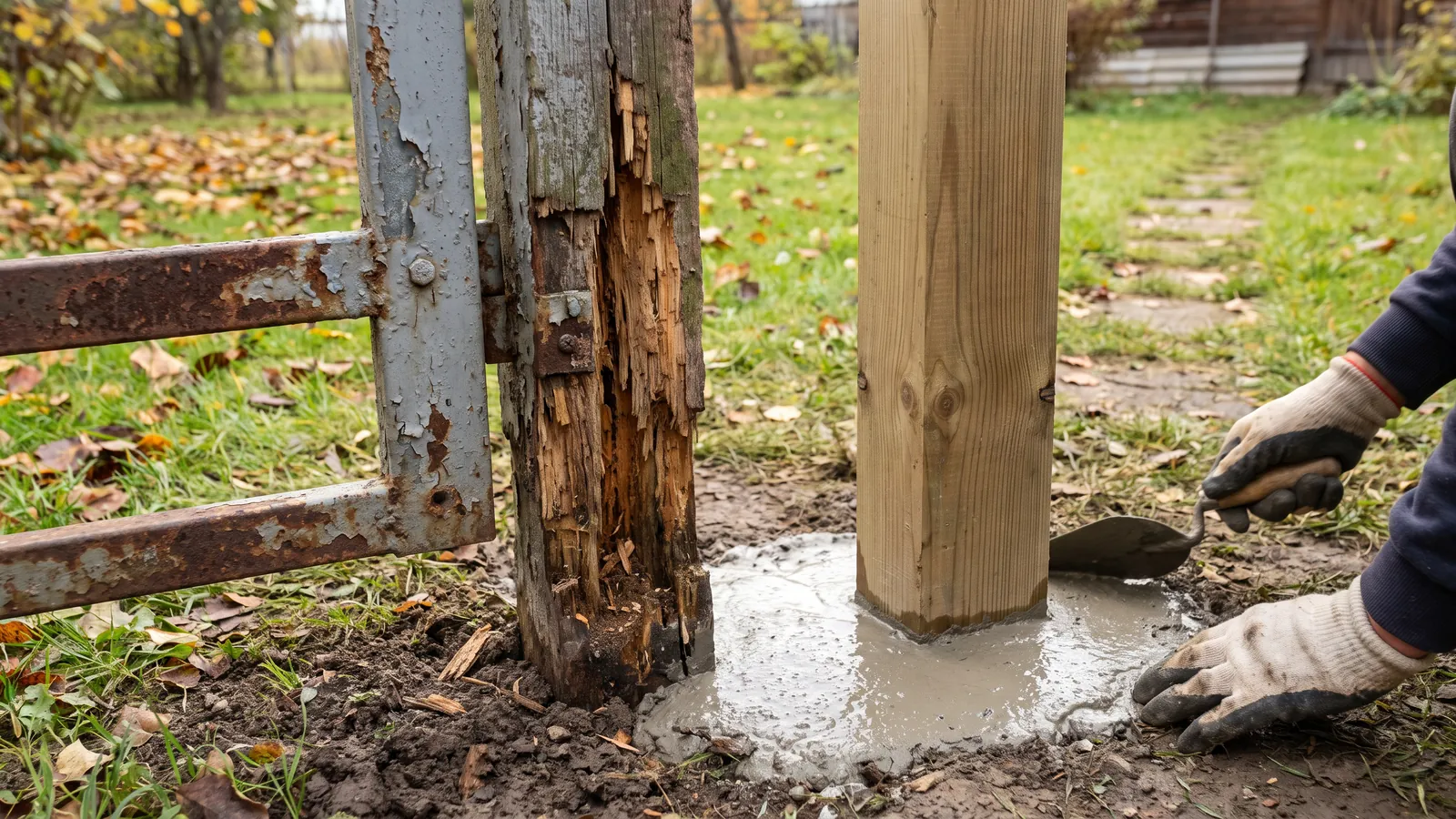
Most fence failures here come down to one of three things: rotted posts, posts that were never deep enough for sandy ground, or a storm that found both.
A fence rarely fails all at once. A post rots at the ground line and the fence starts to lean, a gate drops an inch and stops latching, a few pickets split. Then a tropical storm comes through with soaked ground and gusts, and the weak run goes over. We see the pattern after every big storm season; Florence in 2018 and Isaias in 2020 left fences down from Southport to Topsail.
Repair starts with finding the cause, not just the damage. If one post has rotted because it was set in soil, we replace it in concrete and check its neighbors, which are usually the same age. If a whole run leans because the posts are too shallow, patching one section just moves the problem. If a gate sags, the fix may be a new hinge post rather than new hinges. We tell you which it is and what it costs, and when an old fence has reached the point where replacement makes more sense than repair, we say so plainly.
For storm damage, we prioritize getting the yard secure, especially where a fence keeps pets in or encloses a pool, then rebuild the damaged sections to match the surviving fence as closely as the boards and panels allow. Homeowners' insurance sometimes covers fence damage from a covered storm; we give you a written, itemized estimate and photos you can send to your adjuster, but the claim is between you and your insurer.
How a repair visit goes
- Look at the whole fence. Damage, post condition along the run, and why it failed
- Give options. Repair the damaged part, or replace the run if the rest is failing too, with both priced
- Secure first. Where pets or a pool depend on the fence, a temporary close-off comes first
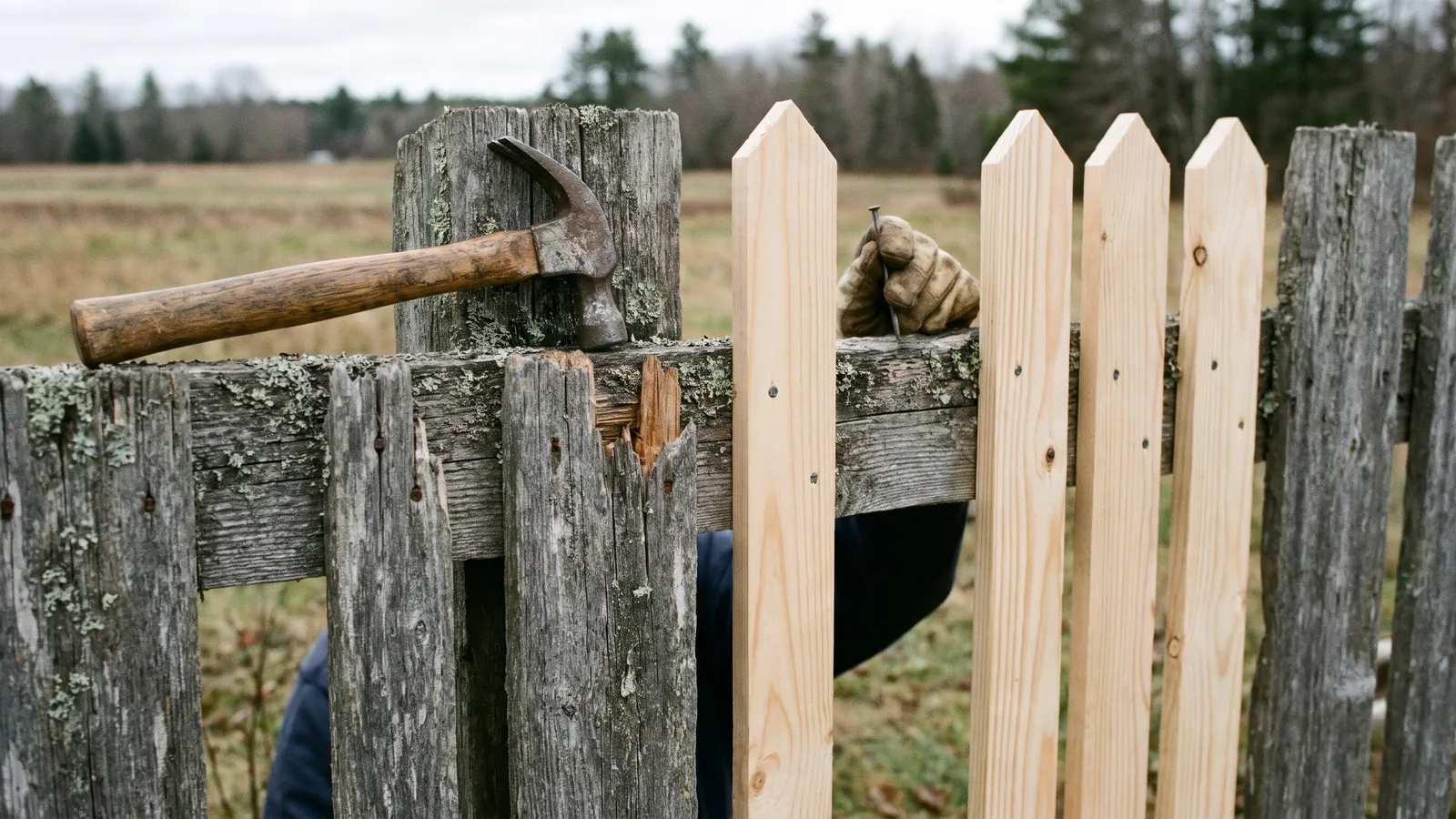
- Rebuild. New posts in concrete, rails and boards or panels matched to the existing fence
- Re-hang gates. Gates re-hung, braced and latched
Repair prices
| What | Typical 2026 range | Notes |
|---|---|---|
| Replace one post | $175 – $400 | Includes concrete and re-attaching the rails |
| Rebuild one 8 ft wood section | $250 – $600 | Post, rails and pickets |
| Replace pickets | $12 – $25 / board | Installed, matched as closely as possible |
| Re-hang or brace a sagging gate | $150 – $400 | New hinge post costs more |
| Vinyl panel replacement | $200 – $500 | If the style is still made |
| Remove storm-damaged fence | $3 – $7 / ft | Hauled away |
2026 planning ranges. A service visit is free when you go ahead with the repair; the written estimate lists every item.
Questions about fence repair
Can you match my old fence?
Usually close. Pine boards weather from green to grey, so new boards look different for a season or two. Vinyl and aluminum can be matched exactly if the style is still made.
Is it worth repairing an old fence?
If the posts are sound and only boards or a section failed, yes. If posts are rotting along the whole run, replacement is usually cheaper over a few years.
Does insurance cover a fence blown down in a storm?
Sometimes, depending on your policy and deductible. We give you an itemized estimate and photos; the claim is between you and your insurer.
How fast can you come after a storm?
We prioritize yards where a fence keeps pets or a pool secure. Call and tell us what is down.
Why do posts rot at the ground?
Untreated or above-ground-rated posts, posts set in soil, and water sitting against the wood. Concrete crowned to shed water and ground-contact posts last much longer.
Related pages
Price your fence repair project
Tell us where the fence goes and what you have in mind. An estimator comes out, measures the line and leaves a written price, free of charge.
- Measured on site, not guessed from a photo
- Material, height and gates priced line by line
- Or call (910) 807-8208. Calls answered 24 hours, 7 days.